Importance Of Teaching Critical Thinking To Students

+ نوشته شده در دوشنبه ۱۴۰۱/۰۶/۱۴ ساعت 22:9 توسط نویدبهداروند
|
Thinking critically will boost creativity and enhance the way you use and manage your
time (Hader, 2005) and critical thinking not only describes the ability to think in accordance
with the rules of logic and probability, but also the ability to apply these skills to real-life
problems, which are not content-independent. . Critical thinking can provide you with a more
insightful understanding of yourself. It will offer you an opportunity to be objective, less
emotional, and more open-minded as you appreciate others' views and opinions. By thinking
ahead, you will gain the confidence to present fresh perspectives and new insights into
burden some concerns.
problems in a systematic, innovative, open-minded, and inquisitive way.”
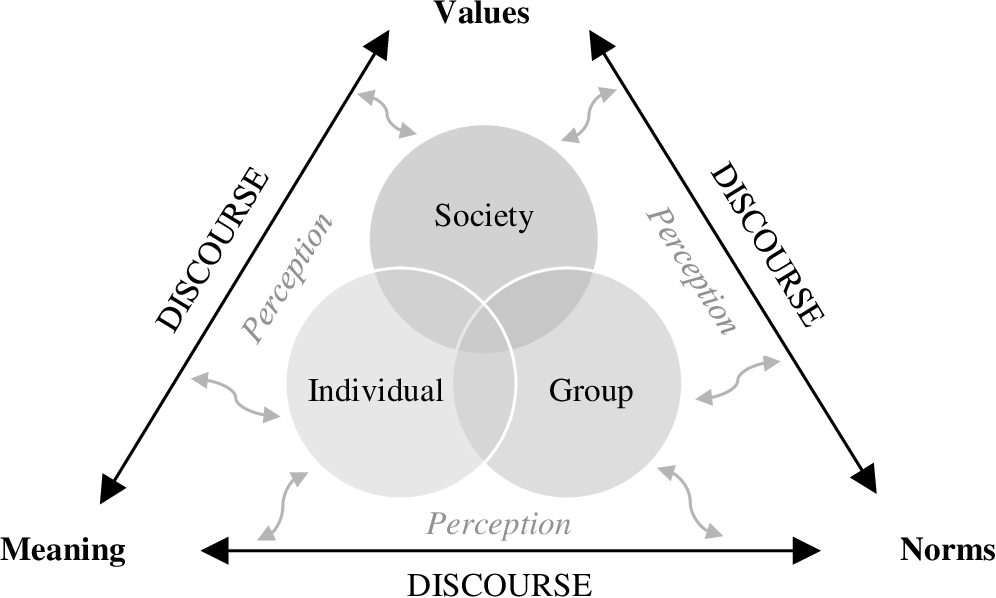

Applying critical discourse analysis to classrooms
This special issue provides a collection of cutting-edge and state-of-the-art research that examines the wider sociocultural and sociopolitical aspects of classroom discourse. The current issue is the journal’s first attempt to collectively explore what can be captured when looking at classroom discourse through a critical lens. The contributors of the special issue draw from theoretical perspectives that typify the diversity that exists in critical approaches to classroom discourse.10 (3–4): 209–215. doi:10.1080/19463014.2019.1635032. [Taylor & Francis Online], [Web of Science ®], [Google Scholar]
Critical discourse analysis (CDA) is a growing interdisciplinary research movement composed of multiple distinct theoretical and methodological approaches to the study of language. Each has its own particular agenda. Despite this diversity, CDA scholars commonly view language as a form of social practice, and are concerned with systematically investigating hidden power relations and ideologies embedded in discourse. They are likewise dedicated to examining the social and material consequences of discourse. Sharing Foucault's dialectical view of discourse, CDA researchers consider discourse to be socially shaped as well as socially constitutive. They maintain an explicit impetus to intervene actively in, or challenge, the power relations or social problems under investigation. Also in common with FDA, critical discourse analysts usually encourage researchers to explicitly engage with their own interests and positionality, and practice self-critical reflexivity throughout the research process. CDA research often begins with a research topic or problem, rather than with fixed theoretical or methodological positions. Robust contextual understandings of the dynamics of particular topics or problems (as well as the particular discourse under investigation) are intended to inform specific research design choices regarding theory, methodology, and methods. Consequently, CDA's research design and methodological processes can be somewhat flexible, iterative, and adaptive according to the specifics of a project. Several notable CDA scholars have attempted to outline methodological processes in an effort to strengthen the rigor of CDA, as well as to provide strategies for others to use. Norman Fairclough, Ruth Wodak, Teun Van Dijk, and James Paul Gee, for example, all proposed different (and sometimes mutually exclusive) methodological strategies for conducting CDAs. Although CDA scholars acknowledge the many possible forms and genres of semiotic meaning, much CDA scholarship tends to focus on textual genres of discourse. There have been important efforts to further develop and apply CDA methodologies to visual and multimodal genres of discourse, however (see Rose; Machin and Mayr, for example).
Multiple CDA approaches explicitly or implicitly attempt to make links between micro-, meso-, and macroscale social phenomena, mapping discourse analyses across these scales correspondingly. Fairclough conceptualized these scales as a three-dimensional model consisting of discursive events (micro), discursive practices (meso), and social structures (macro). Fairclough suggested that CDA research should shift between descriptive, interpretive, and explanatory stages, each bolstered by oscillating between different scales of analysis. At the microlevel of discursive events, researchers analyze texts or other forms of discourse to provide rich description (typically taking account of content, structure, grammar, vocabulary, intertextuality, and rhetorical or literary devices). At the mesolevel of discursive practice, analysts examine the processes underlying discursive production, dissemination, and assimilation, and interpret the discourse in relation to this contextual understanding. The macrolevel of social structures requires an understanding of the broader social context (including implicit and explicit rules, norms, or mores governing discourse and society). Macrolevel analysis likewise necessitates the reintegration of insights gleaned through the micro- and mesoscale investigations to explain the relationship between discourse, ideology, and the sociomaterial world. This analytical process is rarely—if ever—linear; arguably, the analyst must shift between descriptive, interpretative, and explanatory activities at micro-, meso-, and macroscales of investigation in order to produce cohesive, robust explanations of discursive and social phenomena.
Critical human geographers with a wide range of research interests have been increasingly adopting CDA approaches as an investigative framework. As with other approaches to conducting discursive analysis, CDA can be gainfully applied to many of the types and formats of data human geographers (and those in the social sciences more broadly) typically collect: from interviews, ethnography, speeches, historical, or policy documents, through to maps, monuments, and media, to name a few. CDA might be particularly attractive to human geographers interested in operationalizing CDA's investigative framework to explain the relations between discourse, power, and ideology across micro-, meso-, and macrolevel social and spatial scales and phenomena. Any particular approach has various strengths, weaknesses, and navigational challenges. Nevertheless, discourse analysis offers investigative tools to human geographers aiming to engage critically with issues of discourse, representation, power, and inequality across different sociomaterial scales.
 اساتید و دانشجویان دانشگاه فرهنگیان خوزستان سایت حاضر را با هدف اشتراک دانش و تجربه در زمینه رشته های مختلف دانشگاه فرهنگیان راه اندازی نمودند. هدف آن است که دانشجویان ورودی هر سال این مرکز با همکاری با اساتید خود در دروس مختلف ، کتب علمی، فایل های تدریس، پروژه های علمی دانشجویی انجام شده، تجارب و خاطرات خود از آموزش دانش آموزان، محتواهای علمی و مفید، معرفی سایت های مورد نیاز حرفه معلمی و.... را با هدف کمک به آموزش و پرورش( سیاست گذارن/ معلمان / مدیران/ معاونین) و دانشگاه فرهنگیان( اساتید/ مدیران/ معاونین و دانشجو معلمان و مهارت آموزان ماده 28) به اشتراک بگذارند.